Do I need to complete a UK self assessment tax return?

TL;DR:
A UK Self Assessment tax return is necessary for individuals with certain untaxed or high-income sources.
Failure to register or file on time results in automatic penalties, regardless of tax owed.
A UK Self Assessment tax return is the formal process by which HM Revenue and Customs (HMRC) collects income tax on earnings not taxed at source. You must complete one if your financial circumstances fall within categories HMRC defines as requiring direct reporting. Many people assume their employer handles everything through PAYE, but that assumption leaves a significant number of individuals filing late or facing penalties. Knowing whether you are obligated, and acting before the deadlines, is the difference between compliance and an avoidable fine.
Do I need to complete a UK self assessment tax return?
The answer depends on your income sources, not just your total earnings. HMRC sets specific thresholds and categories that trigger the legal obligation to file.
The most common situations requiring a return are:
Self-employment income above £1,000 gross. Any sole trader earning above £1,000 in gross receipts must file, regardless of whether a profit was made after expenses.
Rental income. Landlords receiving income from property must report it. If you are looking at ways to manage that liability, the UK landlord tax guide covers the key reliefs available.
Capital gains above £3,000. Gains exceeding the £3,000 Annual Exempt Amount from selling shares, property, or other assets require reporting.
Dividends above £500. Dividend income beyond this threshold is not covered by PAYE and must be declared separately.
Income above £100,000. Earnings at this level remove the personal allowance, creating a tax liability PAYE cannot fully resolve.
Foreign income. No minimum threshold applies. Any untaxed foreign income, including overseas pensions or rental income, requires a return.
High Income Child Benefit Charge. Households where the highest earner exceeds £60,000 and Child Benefit is received must file, even if that benefit was never claimed directly.
Untaxed income from tips or commission. If your employer does not collect tax on these through payroll, you owe it directly to HMRC.
Each of these categories represents a situation where PAYE simply cannot capture the full tax picture. If more than one applies to you, the obligation is even clearer.
How do I confirm whether I need to file?
HMRC provides an official online checker called “Check if you need to send a Self Assessment tax return.” It takes a few minutes, requires no registration, and gives tailored guidance at no cost. This tool is the most reliable first step for anyone uncertain about their obligations.
A separate trigger exists regardless of the tool’s output. If HMRC sends you a formal Notice to File (SA316), you are legally required to submit a return or formally request that HMRC withdraws the notice. Ignoring a Notice to File results in an automatic £100 penalty, applied even if no tax is ultimately owed. The notice creates the obligation; your belief that you owe nothing does not remove it.
Pro Tip: If you received a Notice to File but believe you no longer need to file, contact HMRC directly to request withdrawal before the deadline. Do not simply ignore it.
Using the online tool before contacting HMRC also prevents unnecessary filings. Registering when you are not required to creates a compliance obligation that persists until you formally close the account.
Registration and key deadlines for self assessment
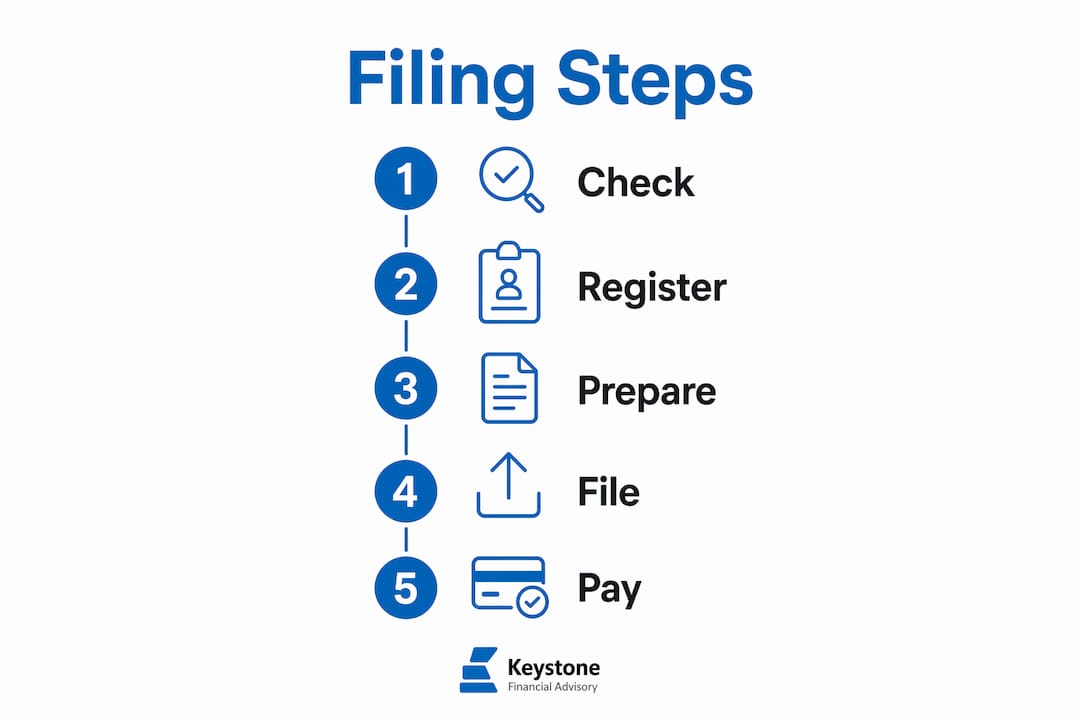
Knowing the self assessment tax return requirements is only useful if you act within the correct timeframes. HMRC operates on a tax year running from 6 April to 5 April.
Register by 5 October. You must notify HMRC of your need to file by 5 October following the relevant tax year. For the 2025/26 tax year, that deadline is 5 October 2026. Late notification carries penalties even when no tax is owed.
Obtain your Unique Taxpayer Reference (UTR). Your UTR is a permanent identifier that stays with you for life. If you have filed before and lost your UTR, retrieve it through the HMRC app or your Government Gateway account. Do not apply for a new one, as duplicate records cause processing errors.
Reactivate rather than re-register. If you filed in a previous year but not last year, your account still exists. Previously registered accounts must be reactivated, not newly registered, to avoid duplicate records.
Submit your paper return by 31 October. For the 2025/26 tax year, paper returns are due by 31 October 2026.
Submit your online return and pay by 31 January. Online returns and payment for 2025/26 are both due by 31 January 2027. Missing this deadline triggers immediate penalties and interest on unpaid tax.
The online route gives you three additional months compared to paper, and HMRC’s digital system flags errors before submission. For most people, online filing is the practical choice.
When should you file voluntarily?
Filing is not always a legal obligation. There are genuine financial reasons to register even when HMRC has not required it.
Claiming Income Tax reliefs. Pension contributions above the basic rate, Gift Aid donations, and certain professional expenses can only be reclaimed through a return. Voluntary filing unlocks these reliefs directly.
Proving self-employed status. Tax-Free Childcare and Maternity Allowance both require evidence of self-employment. A filed return is the clearest proof HMRC and other agencies accept.
Paying voluntary National Insurance contributions. Gaps in your National Insurance record reduce your State Pension entitlement. A return allows you to identify and fill those gaps.
Maintaining accurate records. Filing annually forces a review of your income, expenses, and tax position. That discipline prevents surprises when circumstances change.
Pro Tip: If you register voluntarily to claim a relief, you must actively close the account with HMRC once you no longer need to file. Otherwise, the obligation continues indefinitely.
For sole traders weighing up their structure, the sole trader vs limited company guide explains how the choice affects your filing obligations and tax exposure.
Key takeaways
The legal obligation to file a UK Self Assessment tax return depends on specific income thresholds and sources set by HMRC, and missing registration or submission deadlines results in automatic penalties regardless of whether tax is owed.
Point | Details |
Core filing trigger | Gross self-employment income above £1,000 or untaxed income from other sources requires a return. |
Registration deadline | Notify HMRC by 5 October following the relevant tax year or face penalties. |
Online filing deadline | Submit and pay online by 31 January after the tax year ends. |
Notice to File | A formal SA316 from HMRC creates a legal obligation; ignoring it results in an automatic £100 penalty. |
Voluntary filing benefits | Filing when not required can unlock tax reliefs, prove self-employment, and fill National Insurance gaps. |
My honest view on self assessment after years of working with clients
The most common mistake I see is not the late filing. It is the late realisation. People discover they needed to register months after the 5 October deadline, often because they assumed their income was too small to matter or that HMRC would tell them first. HMRC does not always send a prompt. The obligation to notify sits with you.
The second pattern I notice is people treating the £1,000 gross threshold as a profit threshold. It is not. If you sold £1,200 of handmade goods and spent £900 on materials, you still need to file. The gross figure is what triggers the obligation, not your take-home.
My practical advice is this: use HMRC’s online checker the moment your income situation changes. Do not wait until january. Do not assume your accountant will flag it unprompted unless you have told them about the new income. The system rewards people who engage early and penalises those who wait for a letter that may never arrive.
Record keeping is the other area where I see avoidable stress. A simple spreadsheet updated monthly is enough for most people. The return itself becomes straightforward when the records are clean.
— Shoaib
How KeystoneFA can help with your self assessment
Uncertainty about filing obligations is one of the most common reasons people contact KeystoneFA. Whether you are a sole trader with mixed income, a landlord, or someone who has just crossed the £100,000 earnings threshold, the filing requirements can feel less clear than HMRC’s guidance suggests.
[
](www.keystonefa.co.uk)
KeystoneFA’s team works with individuals across the UK to confirm filing obligations, handle registration with HMRC, and prepare accurate returns before deadlines. The focus is on getting the return right the first time, claiming every relief you are entitled to, and avoiding the penalties that come from late or incomplete submissions. If your income situation has changed this year, speak to KeystoneFA before the 5 October registration deadline passes.
FAQ
Who needs to file a UK self assessment tax return?
You must file if you are self-employed with gross income above £1,000, receive rental or foreign income, have capital gains above £3,000, earn above £100,000, or receive Child Benefit with household income above £60,000.
What is the deadline to register for self assessment?
You must notify HMRC by 5 October following the tax year in which the income arose. For 2025/26, the registration deadline is 5 October 2026.
What happens if I ignore an HMRC Notice to File?
Ignoring a Notice to File (SA316) results in an automatic £100 penalty after the filing deadline, even if you owe no tax. You must either file or formally request HMRC withdraw the notice.
Can I file a self assessment return voluntarily?
Yes. Voluntary filing allows you to claim Income Tax reliefs, prove self-employment for benefit purposes, and make voluntary National Insurance contributions. Once registered, you must formally close the account when filing is no longer needed.
What is a UTR and do I need one to file?
A Unique Taxpayer Reference (UTR) is your permanent tax identity number, required for all Self Assessment filings. Retrieve a lost UTR through the HMRC app or Government Gateway rather than applying for a new one.
Recommended