SPVs explained for UK property investors

TL;DR:
An SPV is a private limited company created to hold property investments and apply corporate tax rules. It offers full mortgage interest deductions and lower tax rates but is most beneficial for portfolios earning more than £15,000 to £20,000 annually. Transferring properties into an SPV can trigger taxes, so planning and timing are crucial for maximum savings.
A Special Purpose Vehicle (SPV) is a private limited company created solely to hold and manage property investments, structured to apply corporation tax rules rather than personal income tax. For UK property investors, SPVs represent one of the most significant structural decisions available under current HMRC and Companies House regulations. The core appeal is straightforward: an SPV lets you deduct mortgage interest in full before calculating taxable profit, something personal ownership no longer allows. This guide covers what an SPV is, how it works legally, what it costs, and when it actually makes financial sense.
How is an SPV legally structured for UK property investment?
An SPV is functionally a standard private limited company with property-focused SIC codes and articles of association tailored to property investment. It is incorporated under the Companies Act 2006, just like any other limited company. The distinction lies in its purpose and configuration, not its legal form.

The SIC code matters more than most investors realise. Using SIC code 68209 (letting of own or leased real estate) signals to lenders and HMRC that the company exists purely for property letting. Using an incorrect or generic SIC code can complicate mortgage applications and blur the company’s purpose.
Key structural requirements for a property SPV include:
Correct SIC code: 68209 for letting, or 68100 for buying and selling real estate
Tailored articles of association: restricting the company’s activities to property investment only
No unrelated trading: any mixed activity, such as consultancy or retail, removes the SPV’s specialist status
Shareholding structure: clearly defined from the outset, as lenders scrutinise ownership carefully
The articles of association are the company’s rulebook. Customising them to restrict activities to property investment protects the SPV’s status with both mortgage lenders and HMRC. A generic off-the-shelf set of articles is rarely sufficient.
What are the tax benefits of using an SPV?
The primary tax advantage of an SPV is its ability to bypass Section 24 restrictions. Section 24, phased in from 2017, limits individual landlords to a basic-rate tax credit on mortgage interest rather than a full deduction. An SPV is not subject to this restriction. Mortgage interest remains 100% deductible before corporation tax is calculated.
Corporation tax rates are lower than higher-rate personal income tax for most investors. The current structure works as follows:
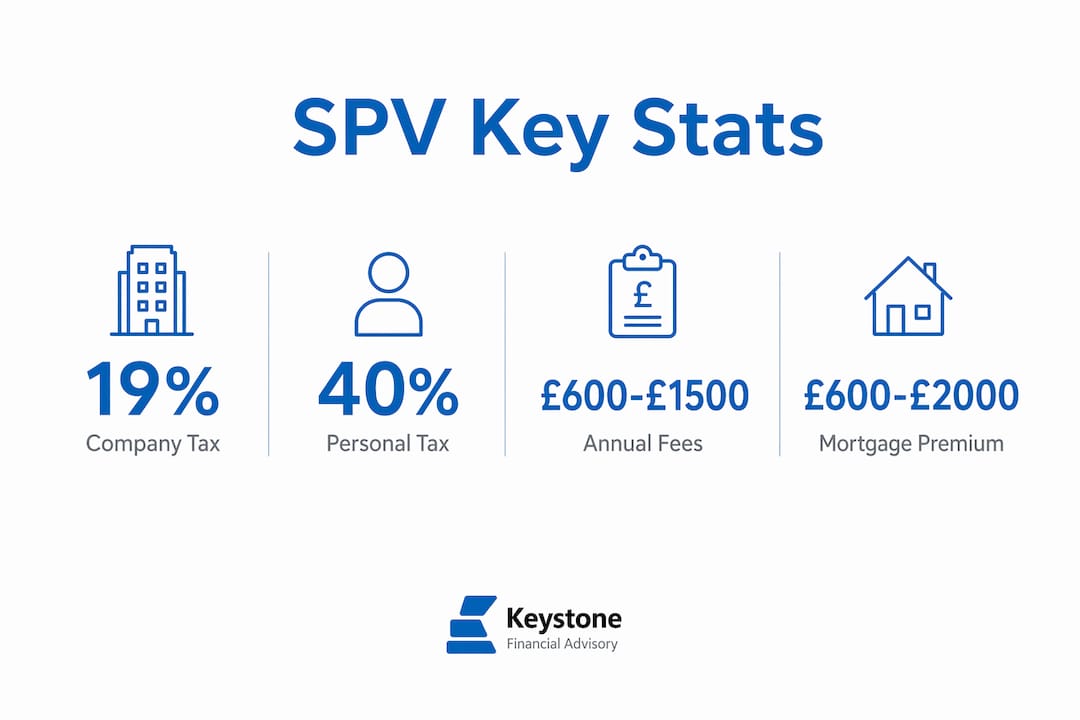
Profits up to £50,000: taxed at 19% corporation tax
Profits between £50,000 and £250,000: subject to tapered marginal relief
Profits above £250,000: taxed at 25% corporation tax
A higher-rate taxpayer paying 40% income tax on rental profits pays significantly more than a company paying 19%. That gap is the core financial case for an SPV. For additional-rate taxpayers at 45%, the difference is even sharper.
The benefit compounds when profits are retained within the company rather than extracted immediately. Retained profits attract only corporation tax. Extraction via salary or dividends triggers personal tax, so timing and method of extraction matter considerably. Investors who reinvest rental income into further acquisitions rather than drawing it out gain the most from the SPV structure.
Pro Tip: If you are a higher-rate taxpayer with a growing portfolio, model your tax position using both personal and SPV ownership before purchasing your next property. The difference in net profit can be substantial over a five-year hold.
Comparing your personal tax position against an SPV is also worth doing alongside a review of allowable limited company expenses, since SPVs can claim many of the same deductions as any other limited company.
What does it cost to set up and run an SPV?
Setup costs are modest. Companies House registration costs £15–£50, and solicitor fees for drafting property-specific articles and selecting the correct SIC code typically run £200–£500. The upfront cost is rarely the issue.
The ongoing costs are where investors need to pay close attention:
Cost category | Typical annual cost |
Accountancy and compliance fees | £600–£1,500 |
SPV mortgage premium over personal rate | 0.3%–1.0% higher |
Mortgage arrangement fees | 1%–3% of loan value |
On a £200,000 mortgage, the higher interest rate alone adds £600–£2,000 per year compared with a personal buy-to-let mortgage. Add accountancy fees on top, and the cost floor becomes significant.
SPVs are generally tax-efficient only for portfolios generating more than £15,000–£20,000 in net rental profit annually. Below that threshold, the compliance and mortgage cost overheads frequently cancel out the tax savings. This is the calculation most investors miss when they first consider the structure.
Pro Tip: Before incorporating, calculate your break-even point. Add your expected annual accountancy fees to the extra mortgage interest cost, then check whether your projected tax saving exceeds that total. If it does not, personal ownership may serve you better for now.
What practical considerations should investors know before using an SPV?
Mortgage access is the most immediate practical constraint. Most lenders only provide mortgages to clean SPVs focused solely on property investment. Mixed income, unrelated trading, or complex shareholding structures reduce the pool of willing lenders considerably. Keeping the SPV clean from day one is not optional; it is a lending requirement.
Transferring existing personally-owned properties into an SPV is a common mistake. This triggers Stamp Duty Land Tax and Capital Gains Tax based on current market value, not the original purchase price. S162 Incorporation Relief can defer CGT in some circumstances, but it applies only when the property activity qualifies as a business rather than passive investment. Most buy-to-let portfolios do not meet that test.
Practical points to plan for before using an SPV:
Buy through the SPV from the outset to avoid transfer taxes entirely
Limit shareholding complexity to maintain lender eligibility for specialist mortgage products
Avoid mixing activities within the SPV, even temporarily
Plan extraction strategy early, since dividend and salary decisions affect personal tax each year
For larger portfolios, the structure evolves further. Investors with 10–15 or more properties often use a holding company with multiple SPV subsidiaries. Each SPV holds a separate property or group of properties, ring-fencing risk and simplifying individual property sales. This adds compliance costs but protects the wider portfolio if one asset encounters legal or financial problems.
Understanding how an SPV sits within your broader company structure is also relevant if you hold other business interests. The distinction between a sole trader and a limited company affects how income from different sources is taxed and reported.
Key takeaways
An SPV delivers meaningful tax savings for UK property investors only when net rental profit exceeds the combined cost of higher mortgage rates and annual compliance fees.
Point | Details |
SPV definition | A private limited company structured solely to hold property, registered at Companies House with a property SIC code. |
Tax advantage | Full mortgage interest deduction before corporation tax, bypassing Section 24 restrictions that apply to individual landlords. |
Cost threshold | SPVs become tax-efficient above approximately £15,000–£20,000 in annual net rental profit. |
Transfer risk | Moving personally-owned property into an SPV triggers SDLT and CGT at current market value. |
Lender requirements | Mortgage lenders require clean SPVs with no mixed trading activity and clear shareholding structures. |
SPVs in practice: what I have seen actually work
Most investors I speak with come to the SPV conversation with one of two misconceptions. Either they believe the tax savings are immediate and guaranteed, or they assume the structure is too complex to be worth considering. Neither is accurate.
The tax benefit is real, but it is conditional. A landlord with two properties and modest rental income will likely spend more on accountancy and mortgage premiums than they save on corporation tax. The maths only tips in favour of the SPV once the portfolio reaches a meaningful size. I have seen investors incorporate too early and spend years paying more than they save.
The more common error, though, is waiting too long. Transferring properties later triggers SDLT and CGT, which can cost far more than the tax saved over several years of SPV ownership. The right time to incorporate is before you buy, not after you have built a portfolio personally.
My advice is consistent: run the numbers with a specialist before you commit to either structure. The SPV is not a universal solution, but for the right investor at the right portfolio size, it is the most tax-efficient structure available in the UK today.
— Shoaib
How KeystoneFA supports property investors with SPVs
Property investors using SPVs face a specific set of tax, compliance, and structuring decisions that general accountants rarely handle well. KeystoneFA works with investors at every stage, from initial SPV tax consultation through to ongoing Companies House and HMRC compliance.
[

The team at KeystoneFA understands the interplay between corporation tax, Section 24, mortgage structuring, and extraction strategy. Whether you are considering your first SPV or managing a growing portfolio, the advice you receive is grounded in current legislation and tailored to your actual numbers. Book a consultation to find out whether an SPV makes financial sense for your portfolio in 2026.
FAQ
What is an SPV in UK property investment?
An SPV is a private limited company incorporated specifically to hold property, using SIC codes such as 68209 and articles of association restricted to property investment activities.
Do SPVs avoid Section 24 mortgage interest restrictions?
Yes. SPVs are not subject to Section 24, so mortgage interest is fully deductible before corporation tax is calculated, unlike personal buy-to-let ownership.
What does it cost to run a property SPV each year?
Annual accountancy and compliance fees typically run £600–£1,500, plus a mortgage rate premium of 0.3%–1.0% above personal buy-to-let rates.
Can I transfer my existing properties into an SPV?
Transferring personally-owned properties into an SPV triggers Stamp Duty Land Tax and Capital Gains Tax based on current market value, making early planning critical.
When does an SPV become worthwhile for a UK investor?
An SPV generally becomes tax-efficient once net rental profit exceeds £15,000–£20,000 per year, at which point the tax savings outweigh the additional compliance and mortgage costs.
Recommended