EV charging costs: what UK limited companies can claim

TL;DR:
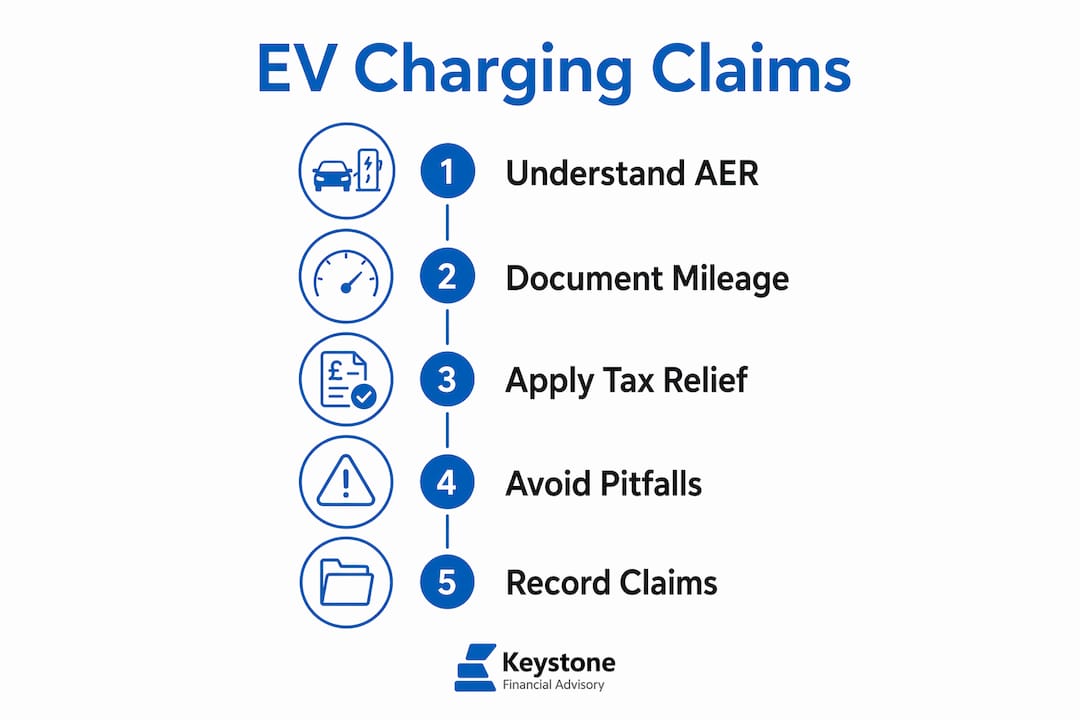
UK limited companies can claim electric vehicle charging costs tax-efficiently through HMRC’s Advisory Electric Rates and capital allowances. From March 2026, companies can reimburse EV charging at set rates, and purchasing new zero-emission vehicles before March 2027 allows a 100% First Year Allowance. Accurate record-keeping and understanding HMRC guidance are essential to ensure compliance and maximize tax benefits.
UK limited companies can claim EV charging costs tax-efficiently through HMRC’s Advisory Electric Rates (AER) and capital allowances for electric vehicles. From 1 march 2026, HMRC sets AER at 7p per mile for home charging and 15p per mile for public charging, reviewed quarterly. Companies purchasing new zero-emission vehicles before 31 march 2027 qualify for a 100% First Year Allowance, cutting taxable profits in the year of purchase. Getting these claims right requires correct documentation, clear mileage records, and an understanding of where HMRC draws the line between business and private use.
How can UK limited companies reimburse employees for EV charging costs?
Reimbursement is the most common way limited companies handle UK EV charging expenses, and HMRC’s Advisory Electric Rates define the tax-free ceiling. Payments at or below AER require no P11D reporting and carry no income tax or National Insurance liability for the employee. That simplifies payroll considerably and removes a common compliance headache.
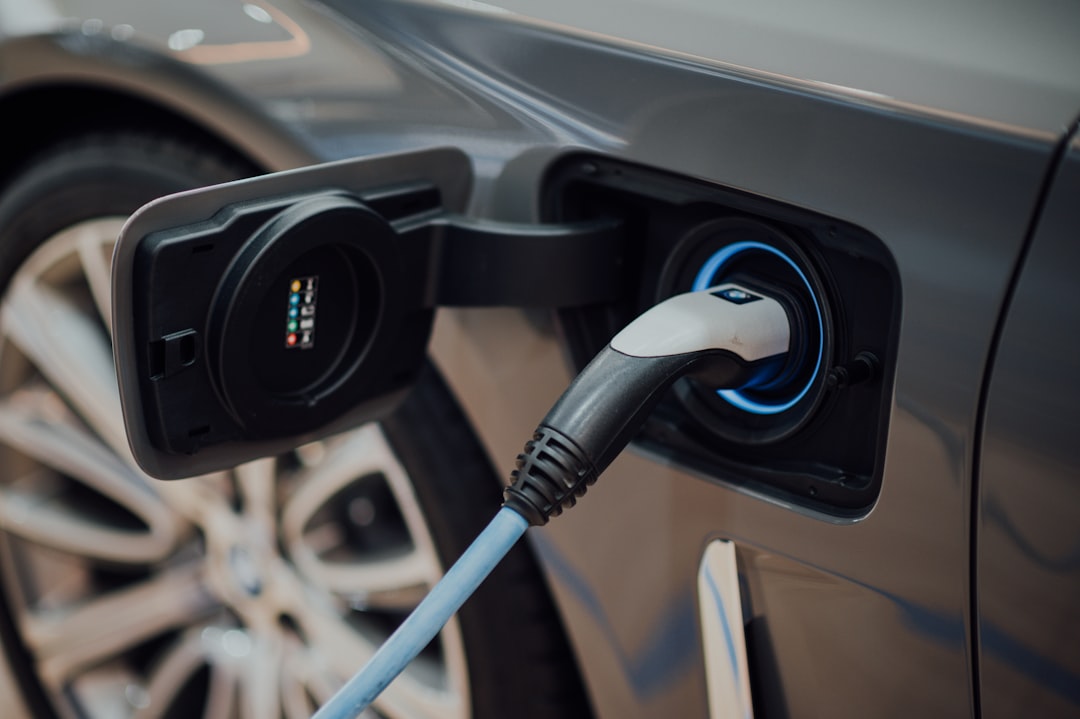
The distinction between home and public charging matters here. From march 2026, the AER is 7p per mile for home charging and 15p per mile for public charging. These rates reflect the different unit costs of electricity across charging environments and must be applied correctly to the relevant journey type.
The rules also differ depending on who owns the vehicle:
Company-owned EVs: AER applies. The company reimburses the employee for business miles charged at home or at a public point.
Employee-owned EVs used for business: AER does not apply. Instead, AMAP rates apply to employee-owned vehicles. Using AER for personal vehicles is a common and costly mistake.
Commuting miles: Commuting counts as private use and cannot be reimbursed tax-free. Only verified business mileage qualifies.
Above-AER reimbursements: These are only tax-free if the employer holds documented evidence of actual electricity costs per mile. Without that proof, the excess is taxable and triggers Class 1 National Insurance contributions.
Pro Tip: Keep a digital mileage log that records the date, destination, business purpose, and miles driven for every journey. Apps linked to your vehicle or fleet management system make this far easier to maintain and audit.
What corporation tax reliefs apply when buying an electric vehicle?
The 100% First Year Allowance is the most significant tax relief available to limited companies buying electric vehicles. A company purchasing a new, unused, zero-emission car before 31 march 2027 can deduct the full cost against taxable profits in the year of purchase. At the current corporation tax rate of 25%, a £40,000 vehicle generates a £10,000 tax saving in year one.
Three conditions must all be met to qualify:
The vehicle must be new and unused at the point of purchase.
It must produce zero CO2 emissions.
The expenditure must fall before 31 march 2027.
Used electric cars do not qualify for the 100% FYA. They enter the main capital allowances pool and attract an 18% writing down allowance each year instead. That is a materially slower rate of relief and a meaningful difference in cash flow terms.
One nuance that catches directors out: hire purchase qualifies for the 100% FYA where ownership passes to the company, but leased vehicles do not, because the leasing company retains ownership throughout. The FYA follows ownership, not possession.
Pro Tip: Record your FYA claim correctly on the CT600 capital allowances section. An incorrectly completed return can delay relief or trigger an HMRC enquiry. If you are unsure, a tax consultation with a qualified adviser is worth the time.
Are there tax exemptions for workplace EV charging facilities?
Employer-provided workplace charging is one of the cleanest tax positions available. Electricity supplied at or near the workplace creates no taxable benefit in kind, provided the facility is generally available to all employees rather than restricted to specific individuals. That condition is straightforward for most businesses to meet.
The electricity costs the employer pays for workplace chargers are fully deductible as a business expense. The installation cost of the charging point itself also qualifies for capital allowances. Both positions are well-established under HMRC guidance.
Charging type | Tax treatment | P11D required? |
Workplace charging (employer-provided) | No benefit in kind; electricity cost deductible | No |
Home charging (company car, at AER) | Tax-free reimbursement up to AER | No |
Home charging (above AER, no proof) | Excess is taxable benefit | Yes |
Public charging (company car, at AER) | Tax-free reimbursement up to AER | No |
Employee-owned EV (business miles) | AMAP rates apply, not AER | No (if within AMAP) |
VAT recovery on workplace charging electricity is generally straightforward where the supply is to the business. Home charging is a different matter entirely, covered in the compliance section below.
What are the common pitfalls when claiming EV charging costs?
The most frequent error directors make is reimbursing above the AER without holding documented proof of actual electricity costs. Excess reimbursement without evidence is treated as a taxable benefit, triggering income tax for the employee and Class 1 National Insurance contributions for the company. That is an avoidable cost that arises purely from poor record-keeping.
A second common mistake is applying AER to employee-owned vehicles. AER governs company cars only. Employees using their own EVs for business travel must be reimbursed under the Approved Mileage Allowance Payment scheme. Mixing the two schemes creates incorrect tax treatment on both sides.
VAT recovery on home charging is the third area where companies run into difficulty. Home charging VAT is complex because the electricity supply is made to the householder, not the business. Most advisers recommend accepting VAT neutrality on home charging reimbursements rather than attempting recovery that is difficult to substantiate.
Practical steps to stay compliant:
Maintain a mileage log for every business journey, separating business from private miles clearly.
Retain charging receipts or app records showing the cost per session.
Apply AER to company cars and AMAP to employee-owned vehicles without exception.
Review reimbursement policies each time HMRC updates the AER, which happens quarterly.
Pro Tip: If your company has directors charging at home and employees using a mix of company and personal EVs, the interaction of AER, AMAP, and VAT rules can become genuinely complex. Specialist advice from a firm like KeystoneFA pays for itself quickly in avoided liabilities.
Key takeaways
UK limited companies can claim EV charging costs tax-efficiently by applying HMRC’s Advisory Electric Rates correctly, claiming the 100% First Year Allowance on new zero-emission vehicles, and maintaining thorough mileage and charging records.
Point | Details |
Advisory Electric Rates | 7p/mile (home) and 15p/mile (public) from march 2026; payments at or below these rates are tax-free. |
100% First Year Allowance | New, unused zero-emission cars bought before 31 march 2027 qualify for full cost deduction in year one. |
Workplace charging exemption | Employer-provided charging available to all staff creates no benefit in kind and is fully deductible. |
AER vs AMAP distinction | AER applies to company cars; AMAP rates apply to employee-owned vehicles used for business. |
Compliance and records | Excess reimbursements without documented proof trigger taxable benefits and National Insurance liabilities. |
EV claims: what I have seen go wrong and how to fix it
Working with limited company directors on corporate electric vehicle expenses, the same patterns appear repeatedly. Most directors understand that EVs carry tax advantages. Far fewer understand exactly where those advantages stop and where liabilities begin.
The AER is updated quarterly. Companies that set a reimbursement rate in january and forget to review it by april are already out of compliance by the time they notice. That is not a theoretical risk. I have seen it create unexpected P11D obligations that could have been avoided with a diary reminder.
The First Year Allowance is genuinely powerful, but timing is everything. Directors who buy a vehicle in late march and fail to confirm the purchase date falls within the qualifying period lose the 100% deduction entirely. A used EV bought a week before a new one would have qualified represents a significant difference in year-one tax relief. The company car vs mileage claims decision also deserves more attention than it typically gets. The FYA changes the maths considerably.
My strongest advice: treat your EV reimbursement policy as a live document. Review it every quarter when HMRC publishes updated rates. Build the review into your accounting calendar, not your to-do list.
— Shoaib
How KeystoneFA helps limited companies get EV claims right
EV tax rules sit at the intersection of capital allowances, employment tax, and VAT, and that complexity catches even experienced directors out.
[
KeystoneFA works with UK limited companies to structure EV charging claims correctly from the outset. The team reviews your current reimbursement policies against the latest HMRC Advisory Electric Rates, identifies whether your vehicle purchases qualify for the 100% First Year Allowance, and flags any VAT or P11D exposure before it becomes a problem. Every engagement is handled by advisers with direct experience in UK tax compliance, not generalist support staff. If you want to make sure your company is claiming everything it is entitled to, book a consultation with KeystoneFA today.
FAQ
What is the Advisory Electric Rate for 2026?
From 1 march 2026, HMRC sets the AER at 7p per mile for home charging and 15p per mile for public charging. These rates are reviewed quarterly.
Can a limited company claim the full cost of an electric car?
Yes, if the car is new, unused, and produces zero CO2 emissions, the company can claim a 100% First Year Allowance on the purchase price, provided it is bought before 31 march 2027.
Do employees pay tax on EV charging reimbursements?
Reimbursements at or below the AER are tax-free and do not require P11D reporting. Payments above the AER are taxable unless the employer holds documented proof of actual electricity costs.
Does the AER apply to an employee’s own electric car?
No. AER applies only to company-owned vehicles. Employees using their own EVs for business travel must be reimbursed under the Approved Mileage Allowance Payment scheme instead.
Is workplace EV charging a taxable benefit?
Employer-provided charging at or near the workplace is not a taxable benefit in kind, provided the facility is available to all employees and not restricted to named individuals.
Recommended