Electric cars through a UK limited company: still worth it?

TL;DR:
Purchasing an electric car through a UK limited company allows for significant tax benefits before the 2027 deadline. The 100% First Year Allowance enables full deduction of eligible vehicles, making it highly tax-efficient if done on time. Leasing offers flexibility, spreading costs and VAT recovery options, but does not qualify for FYA, unlike outright purchase.
Purchasing an electric car through a UK limited company is defined as the company buying or leasing the vehicle as a business asset, with the associated tax reliefs flowing through the company’s accounts. In 2026, this remains one of the most tax-efficient decisions a director can make. The 100% First Year Allowance lets you deduct the full purchase cost against profits in year one, and the Benefit-in-Kind rate for fully electric cars sits at just 4% this tax year. HMRC’s Corporation Tax rules and the Finance Bill underpin both reliefs, making the case for acting now genuinely compelling.
Is electric car leasing worth it through a limited company in 2026?
The 100% First Year Allowance is the headline benefit for limited company owners buying electric cars outright. A company purchasing a £50,000 electric car can generate approximately £12,500 in Corporation Tax savings in year one at the 25% rate. Miss the deadline and that saving collapses to around £2,250, with the vehicle entering the main capital allowance pool at 18% per annum writing-down relief.
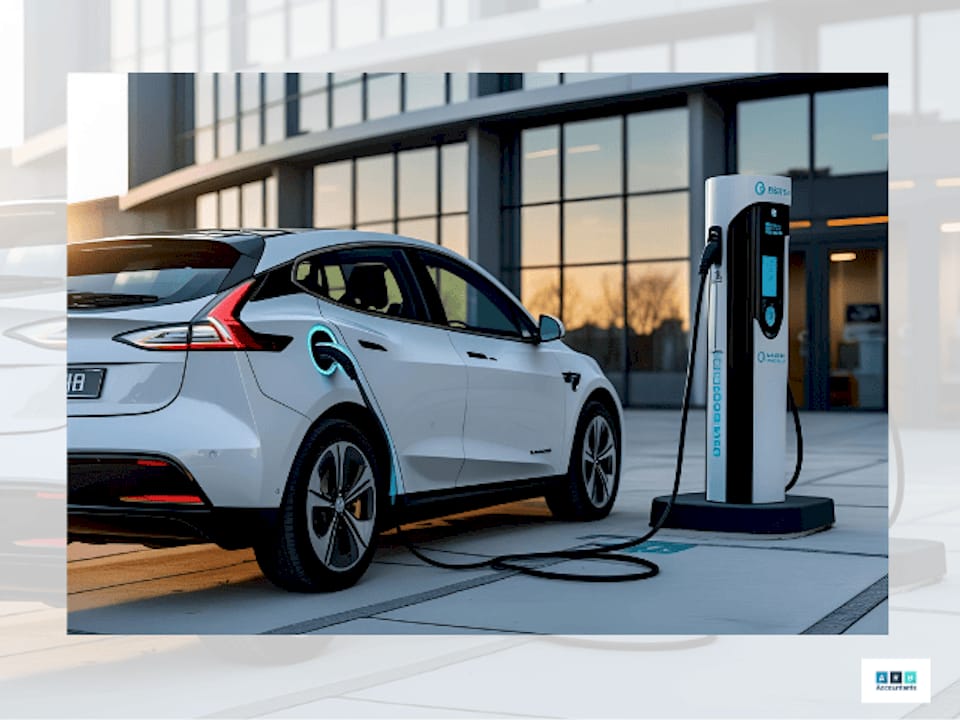
The deadline is firm. The FYA requires the company to both incur the expenditure and take delivery of the car by 31 march 2027. Placing an order before that date is not sufficient. Only brand-new, unused, zero-emission cars where ownership transfers to the company qualify. Pre-registered, nearly new, or leased vehicles where ownership stays with the finance provider do not meet the criteria.
The Benefit-in-Kind rate for fully electric cars in 2026/27 is 4%. That compares with up to 37% for petrol and diesel vehicles. This matters because BIK is the taxable value placed on a company car that a director or employee uses personally. At 4%, a director driving a £50,000 electric company car pays income tax on just £2,000 of notional benefit. The same car with a petrol engine could trigger a £18,500 taxable benefit.
Pro Tip: If you are ordering a new electric car now, confirm the delivery date in writing with the dealer. HMRC requires physical delivery before 31 march 2027, not just a signed contract.
Tax relief | 2026 position |
First Year Allowance | 100% deduction in year one for new zero-emission cars |
BIK rate (electric) | 4% in 2026/27, rising to 9% by 2029/30 |
BIK rate (petrol/diesel) | Up to 37%, no equivalent relief |
FYA deadline | Delivery and expenditure by 31 march 2027 |
Post-deadline relief | 18% per annum via main capital allowance pool |
How does leasing compare to buying an electric car through a company?
Leasing and outright purchase serve different financial needs, and neither is universally better. The right choice depends on your company’s cash position, VAT status, and how long you plan to keep the vehicle.
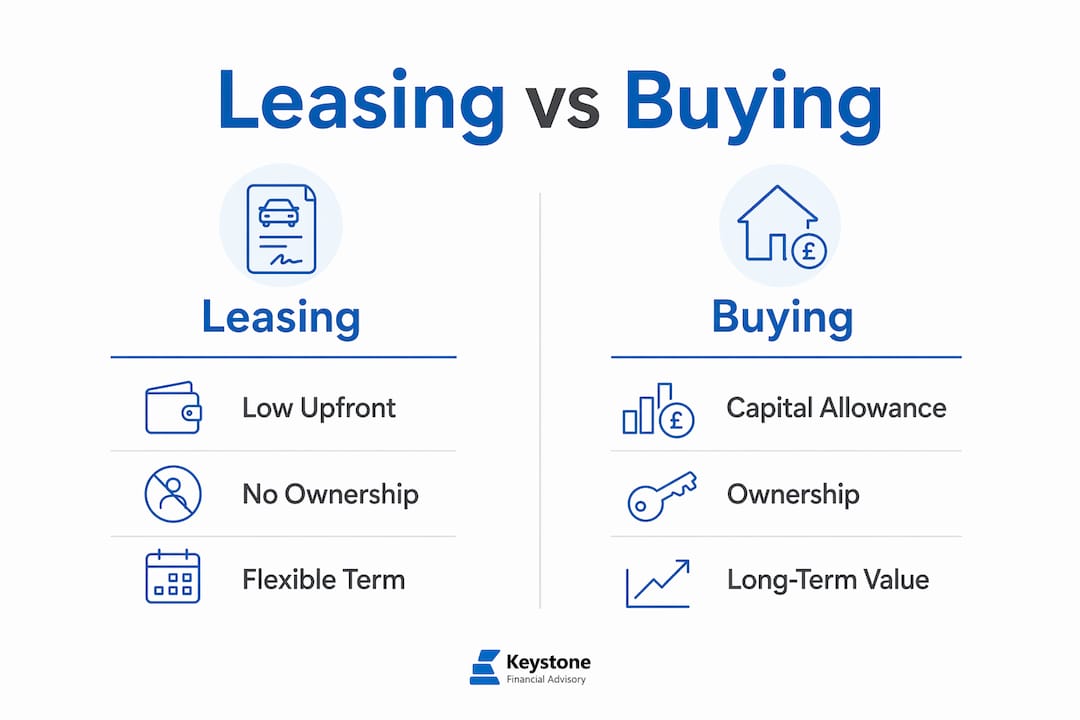
Outright purchase and hire purchase both allow the company to claim capital allowances, including the 100% FYA where eligible. An operating lease, where ownership never transfers, does not qualify for capital allowances. Instead, the monthly lease payments are deductible as a business expense, which spreads relief over the lease term rather than concentrating it in year one.
Leasing electric cars often provides better monthly cash flow and avoids the risk of depreciation on the balance sheet. VAT-registered businesses can typically reclaim 50% of the VAT on lease payments for a car with mixed business and personal use, or 100% if the car is used exclusively for business. This is a meaningful saving on a multi-year lease.
Key considerations when choosing between leasing and buying:
Outright purchase: Qualifies for 100% FYA if new and delivered before 31 march 2027. Best for companies with strong cash reserves and a 25% Corporation Tax rate.
Hire purchase: Also qualifies for FYA. Ownership transfers at the end, so capital allowances apply from the outset.
Operating lease: No FYA, but lease costs are fully deductible. Suits companies that prefer fixed monthly costs and want to avoid residual value risk.
Salary sacrifice: Salary sacrifice schemes reduce both income tax and National Insurance contributions for employees and directors. At a 4% BIK rate, the tax cost of the benefit is minimal, making this one of the most efficient ways to put an electric car in a director’s hands.
Pro Tip: If your company is VAT-registered and the car will have any personal use, an operating lease often beats outright purchase on after-tax cost once you factor in the 50% VAT recovery on lease payments.
You can compare the tax treatment of company car vs mileage claims to understand which approach suits your specific situation before committing.
What are the practical and financial implications of owning an EV as a company asset?
Owning an electric vehicle through a limited company affects the balance sheet, VAT position, and day-to-day running costs simultaneously. Getting each element right determines whether the numbers actually work.
Balance sheet treatment: A purchased EV appears as a fixed asset. The 100% FYA reduces taxable profits immediately but does not remove the asset from the accounts. Depreciation is still charged for accounting purposes, separate from the tax relief.
Running costs: Electric vehicles carry lower fuel and maintenance costs than petrol or diesel equivalents. No oil changes, fewer brake replacements due to regenerative braking, and cheaper per-mile energy costs all reduce the company’s operating expenditure over time.
Charging infrastructure: OZEV grants subsidise workplace EV charger installation for employers, reducing the upfront cost of building charging infrastructure. This makes company electric cars more practical for businesses with premises.
VAT on charging: VAT cannot be reclaimed on public charge point costs, but VAT on business EV purchases and lease costs can be recovered depending on the company’s VAT status and usage split. This distinction matters when modelling total cost of ownership.
“The tax gap between electric and combustion vehicles still favours EVs enough to keep them cost-effective for most limited company owners in the near to mid-term.” — AccountingWEB
Directors often overlook vehicle-related costs that are legitimately claimable. The guide to expenses directors forget to claim covers several relevant categories worth reviewing alongside any EV acquisition.
How will upcoming tax changes affect electric company cars after 2027?
The tax environment for electric company cars is tightening, but it remains favourable compared to combustion alternatives. Understanding the trajectory helps you time your decision correctly.
Year | BIK rate (electric) | Key change |
2026/27 | 4% | Current rate |
2027/28 | 7% | Planned increase |
2028/29 | 8% | Continued rise |
2029/30 | 9% | Scheduled ceiling |
From 2028 | TBC | Pay-per-mile eVED introduced |
The BIK rate rises to 9% by 2029/30, which increases the personal tax cost for directors using company electric cars. That is still a fraction of the 37% rate applied to high-emission petrol vehicles, so the relative advantage persists. The planned pay-per-mile eVED from april 2028 represents a new running cost for electric fleets, as the government replaces lost fuel duty revenue. The precise rate is not yet confirmed, but it introduces a usage-based cost that does not currently exist.
Tax benefits for EVs remain substantially better than for petrol cars despite these reductions. The window for maximum benefit, specifically the 100% FYA combined with a 4% BIK rate, closes in march 2027. Companies that act before that date lock in the strongest possible tax position.
Key takeaways
Electric cars through a UK limited company remain highly tax-efficient in 2026, but the 100% First Year Allowance deadline of 31 march 2027 makes timing the single most important factor in your decision.
Point | Details |
Act before march 2027 | Delivery and expenditure must occur by 31 march 2027 to claim 100% FYA. |
BIK rate is still low | At 4% in 2026/27, the personal tax cost for directors is minimal compared to petrol cars. |
Leasing suits cash flow | Operating leases spread tax relief and allow 50% VAT recovery on mixed-use vehicles. |
Salary sacrifice adds value | Directors and employees can reduce income tax and National Insurance through salary sacrifice at the low BIK rate. |
Future costs are rising | BIK increases to 9% by 2029/30 and pay-per-mile eVED from 2028 will raise total ownership costs. |
My view after advising UK small businesses on this
The numbers in 2026 are genuinely compelling, but I see directors hesitate because they focus on the rising BIK rates rather than the current opportunity. A 9% BIK rate in 2029/30 still looks exceptional against the 37% applied to a petrol car. The real risk is not the future rate. It is missing the march 2027 FYA deadline and losing £10,000 or more in year-one Corporation Tax relief.
Leasing tends to suit founders who are uncertain about their company’s direction over the next three to four years. You avoid residual value risk, keep monthly costs predictable, and still benefit from salary sacrifice. Buying outright makes more sense when cash is available and you want the maximum upfront tax deduction.
The OZEV workplace charging grants are consistently underused. If your company has premises, combining a charger installation grant with the FYA on the vehicle itself produces a genuinely strong financial outcome. Most directors I speak to have not considered both together.
My pragmatic advice: model the numbers now, confirm your delivery timeline with the dealer, and do not assume that ordering before march 2027 is the same as qualifying. HMRC is clear that delivery must happen, not just the order.
— Shoaib
How KeystoneFA can help you get this right
Navigating the FYA deadline, BIK calculations, and VAT recovery rules simultaneously is where many directors make costly errors. KeystoneFA works with founders and small business owners across the UK to structure electric vehicle acquisitions in the most tax-efficient way possible.
[
Whether you are weighing up leasing versus buying, calculating the Corporation Tax impact of a specific vehicle, or planning around the march 2027 deadline, the team at KeystoneFA brings the kind of hands-on experience that generic advice cannot replace. Book a tax consultation to get a clear picture of what an electric company car actually costs and saves in your specific situation. You can also book online at a time that suits you.
FAQ
Does the 100% First Year Allowance apply to leased electric cars?
No. The FYA applies only to new, unused zero-emission cars where ownership transfers to the company. Operating leases, where ownership stays with the lessor, do not qualify.
What is the BIK rate for electric company cars in 2026?
The BIK rate for fully electric cars in 2026/27 is 4%, rising gradually to 9% by 2029/30. This compares with up to 37% for high-emission petrol and diesel vehicles.
Can a limited company reclaim VAT on an electric car purchase?
VAT recovery on a purchased car is blocked unless the vehicle is used exclusively for business with no private use. On leases, 50% of the VAT is typically recoverable where there is mixed use.
What happens if I miss the 31 march 2027 FYA deadline?
The vehicle enters the main capital allowance pool and attracts 18% writing-down relief per annum instead of 100% in year one. On a £50,000 car, this reduces year-one tax relief from approximately £12,500 to around £2,250.
Is salary sacrifice worth using for an electric company car?
Yes. Salary sacrifice schemes reduce both income tax and National Insurance contributions for the employee or director. At the current 4% BIK rate, the taxable benefit is low enough to make salary sacrifice one of the most cost-effective methods available.
Recommended